A Meeting With Too Many Simultaneous Conversations
Eliminating side chatter, cross-talk interference, and fractured attention across physical rooms and remote participant screens.
Why Fragmented Conversations Erode Hybrid Parity
When in-person attendees begin whispering or debating in parallel clusters, remote participants experience an immediate sensory blackout. Conference microphones capture competing acoustic signals, blurring voices together and causing echo-cancellation algorithms to cut off speakers arbitrarily. This dynamic leaves remote colleagues isolated and unaware of context.
Tackling simultaneous side conversations demands clear audio zoning, an active conversational cadence, and strict room moderation rules. By establishing explicit handoff protocols and centralizing the dialogue flow, teams prevent meeting breakdown and ensure every observation reaches all attendees clearly.

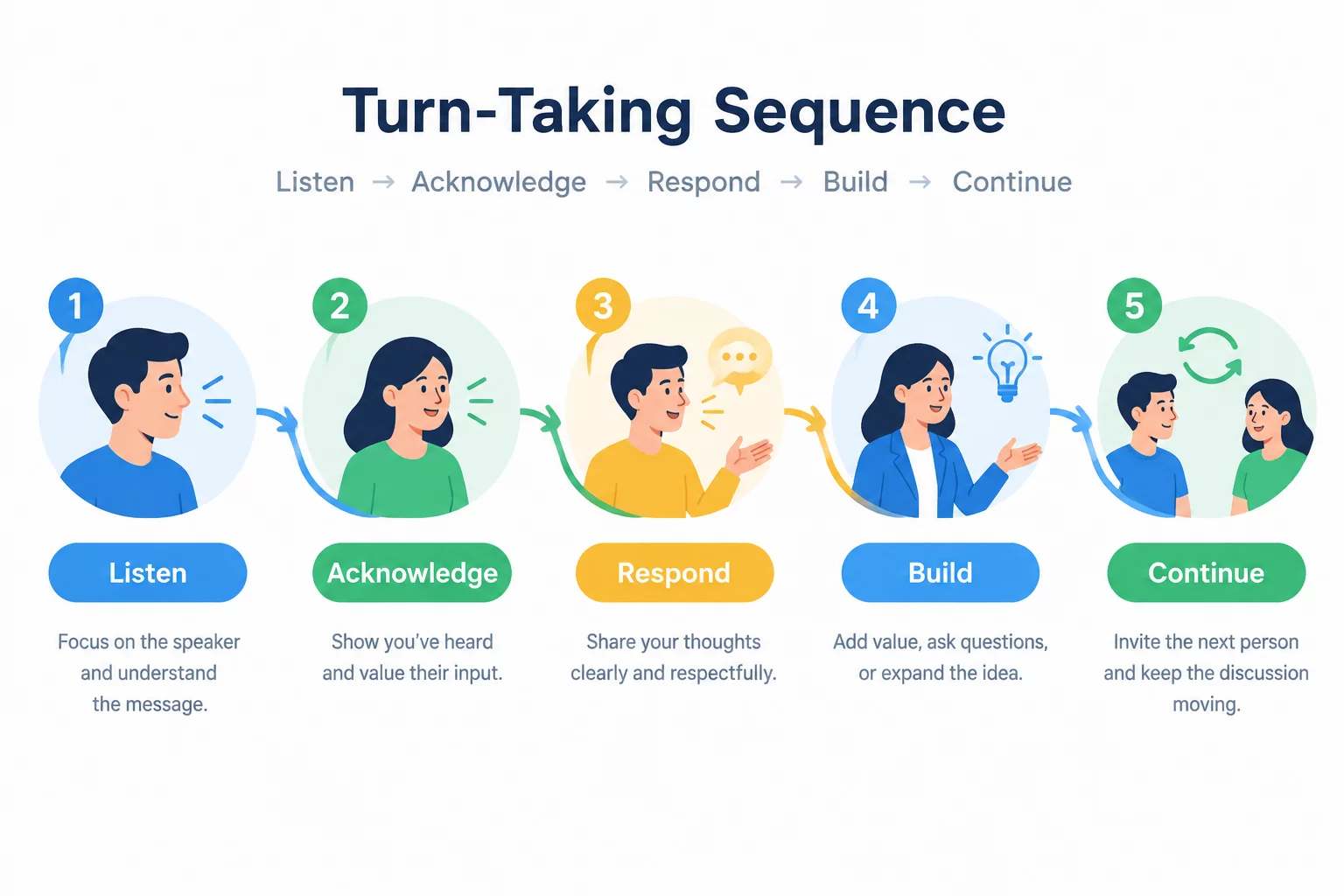
A status meeting keeps splitting into side chats: the room holds three conversations at once while remote callers hear only noise. This piece maps how the discussion is re-sequenced into one audible thread.
How Participants Interact Across the Session
Single-Thread Dialogue Specifications
Operational rules and acoustic control parameters designed to neutralize cross-talk during hybrid collaboration.
| Framework Dimension | Protocol Specification |
|---|---|
| Audio Channel Architecture | Single-source omnidirectional capture with active beamforming prioritization |
| Turn-Taking Mechanism | Unified digital queue via chat reactions or physical hand-raise indicator |
| Side-Channel Management | Dedicated silent digital chat thread for auxiliary links and parallel queries |
| Moderator Intervention Trigger | Verbal reset enforced whenever 2+ concurrent audio streams exceed 3 seconds |
| Buffer Between Speakers | 2-second acoustic pause before shifting floor between room and remote |
| Room Layout Standard | Horseshoe desk arrangement facing primary video confidence monitors |
Restoring Cohesion: Framework for Structured Floor Control
Uncontrolled cross-talk usually stems from loose facilitation and unclear floor-holding conventions. In hybrid setups, natural social pauses are distorted by transmission latencies, prompting multiple participants to speak simultaneously out of uncertainty.
Core Protocols for Eliminating Overlapping Dialogue
- Designate a vigilant floor moderator who actively manages the verbal queue and immediately flags background whispers.
- Channel all side commentary into the collaborative platform chat window instead of verbal asides in the room.
- Enforce a visible hand-raise standard before speaking for both room occupants and remote video attendees alike.
- Conduct deliberate roll-call checks after major discussion blocks to capture unvoiced input from quieter contributors.
When everyone abides by a single centralized conversation stream, meeting efficiency jumps significantly. Decisions are documented without ambiguity, remote retention increases, and cognitive fatigue drops across the entire team.
Frequently Asked Questions
Practical guidance on managing room interruptions and conversational discipline.
Use a calm, predefined visual or verbal signal such as raising an open palm and saying Pausing for the room queue. Re-anchor attention to the main screen and call on the next queued contributor by name.
Ceiling and table conference microphones compress dynamic range and boost subtle acoustic noise, causing whispers near the microphone to compete directly with the main speaker volume.
Encouraging teammates to type thoughts into the meeting chat keeps the voice channel clean while capturing valuable supplementary ideas that can be addressed during dedicated Q&A slots.
Agree on a neutral pause cue in advance, such as a raised hand or the phrase “One voice at a time.” Then restate the active queue and invite the next speaker.
Related Methodologies