Participation Design • 2026-08-12 • Hybrid Work Analyst

A Workspace Ecosystem Where Remote Members Are Not Second-Class

How coordinated room software, camera direction, and shared scheduling keep remote participants visible contributors rather than distant viewers.

Speaker Visibility Presence Equity Shared Spaces

Participation Takeaways

  • Multi-view camera direction gives remote colleagues a clear sightline to every speaker in the room.
  • Room booking tied to real occupancy keeps collaboration spaces predictable for hybrid teams.
  • Speaker-attributed summaries give remote members the same written record as those in the room.
  • Rooms join outside platforms in one touch, so external participants are not split onto laptops.
Learning Situation

A distributed company notices remote staff sit in meetings as silent viewers. They rebuild their workspace tools so remote members appear, speak, and get credited like everyone in the room.

Participation Map

How Participants Interact Across the Session

In-Room Participants Remote Participants Facilitator
Room Entry
In-RoomTake seats around the table
RemoteAppear life-size on the display
FacilitatorConfirms remote members are visible
Speaker Turns
In-RoomAre framed clearly when speaking
RemoteSee each speaker's face up close
FacilitatorSequences turns across both groups
Logistics
In-RoomFind and settle into rooms faster
RemoteWait less for sessions to start
FacilitatorStarts the agenda on time
Record
In-RoomHave comments attributed by name
RemoteKeep their contributions attributed
FacilitatorShares the written record equally
Presence Equity

Fixing the Bowling-Alley Problem for Remote Attendees

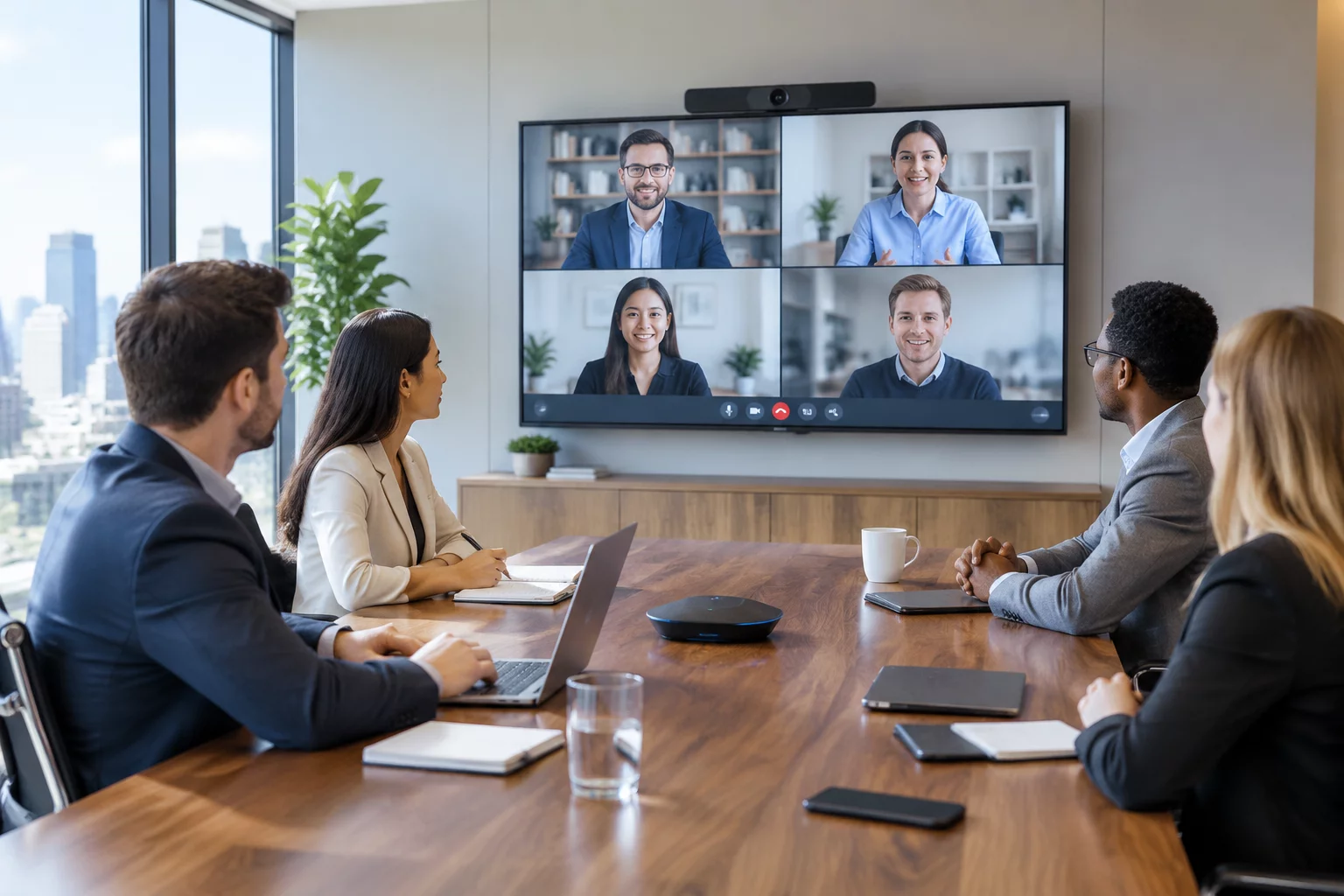
The "bowling-alley" view—remote attendees staring down a long table unable to tell who is speaking—is why remote voices fade out of discussions. The updated ecosystem reframes room software around presence: giving remote participants a readable view of the room and giving the room a visible reminder that remote colleagues are there. The newly announced expansion of the workspace ecosystem addresses this imbalance by integrating advanced multi-camera switching directly into the core platform software. Instead of relying on a single wide-angle lens, the system continuously tracks conversational movement across the room, providing individual cropped video feeds for active contributors.

The effect compounds with facilitation practice: when remote faces stay life-size and speakers are framed clearly, in-room colleagues naturally direct comments to the whole group instead of only to the table.

Consistency

Consistent Participation Across Room Sizes

Standard profiles for huddle rooms, boardrooms, and large venues matter because participation should not depend on which room a team draws. The goal: a remote attendee gets the same visibility and voice in every space.

What Equal Participation Requires

Turn-Taking Fast enough for natural turn-taking
Voice Pickup Every seat's voice reaches remote listeners clearly
External Access Joins meetings on outside platforms
Room Logistics Less time lost before discussion starts
In Practice

Removing the Friction That Eats Meeting Time

Meetings lose participation time to logistics: hunting for rooms, rebooking, restarting calls. The ecosystem automates the overhead so sessions start on time with everyone present:

  • Rooms that free themselves after no-shows keep shared spaces available for real sessions.
  • Wayfinding gets in-room participants seated faster, shortening the late-start window remote attendees spend waiting.
  • Transcripts that name each speaker keep remote contributions attributed in the written record.
Designing Rooms That Include Remote Voices?

Our specialists help align room setups with facilitation practices for equal participation.

Technical Consultation

Discuss Your Meeting Space Design

Share your meeting formats and participant mix for practical suggestions.